On Now
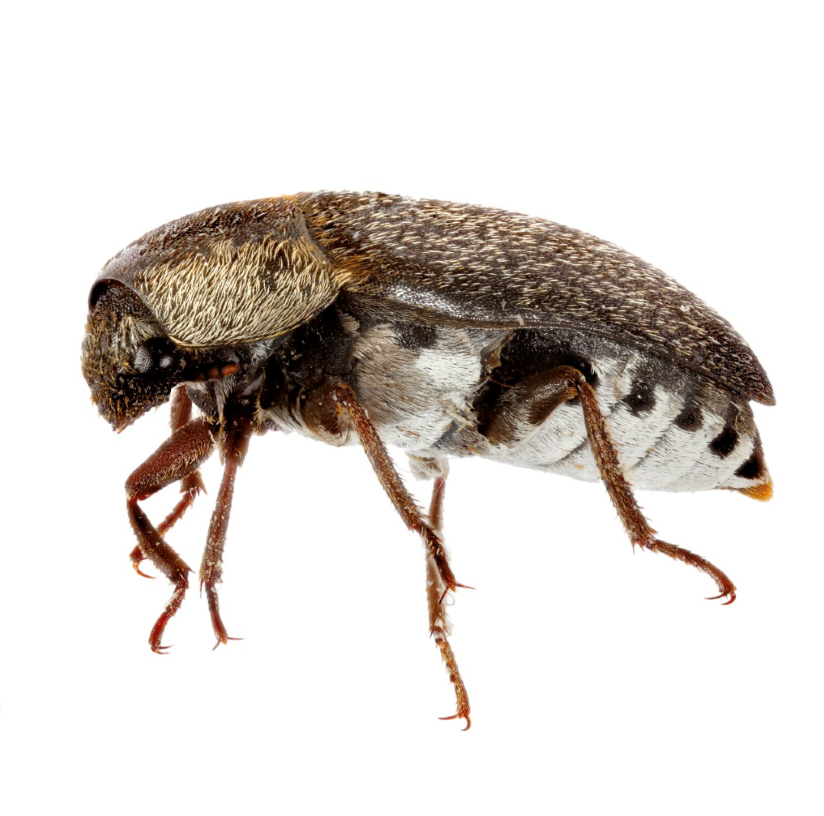
Exhibit: Creepy Crawly Cleaners
Did you ever wonder how the skulls and skeletons found in nature get so clean and white? With more than 500 species of dermestid beetles in the world, these tiny, behind-the-scenes scavengers remove even the most minute pieces of flesh and fur from the bones. Watch the process unfold live in our special spooky exhibit, now on display in the Museum lobby.
The larvae of dermestid beetles are primarily scavengers, feeding on dried plant fibers such as silk, cotton, and wool, or dried animal materials such as skin, fur, and feathers. They will readily eat many types of food – curators at the RSM have observed dermestids eating through aluminum foil!
Although dermestid beetles are a serious pest in many museum settings, the RSM maintains a controlled colony of dermestid beetles to help prepare skeletons for the provincial collection. It takes only a few hours for a robust colony to completely strip the flesh from a small bird or mammal. Knowing how long it typically takes dermestids to locate a dead animal and how long it takes for larvae to develop, investigators can collect dermestids from a site and estimate how long it’s been since the animal died. They are a pretty good useful tool for this sort of investigation, especially when the bones are from a person.